

AI Search Optimization
How Brands Earn Visibility in AI-Generated Results
Some people arrived too late for the gold rush. Others hesitated during the early days of dot-com investing. In both cases, opportunity rewarded those who recognized the shift early.
We are standing in a similar moment now.
The opportunity is AI visibility.
That opportunity has a name: AI search optimization, also known as Answer Engine Optimization (AEO). It is the strategic process of structuring and expanding content so that it is cited inside AI-generated answers rather than only ranked in traditional search results.
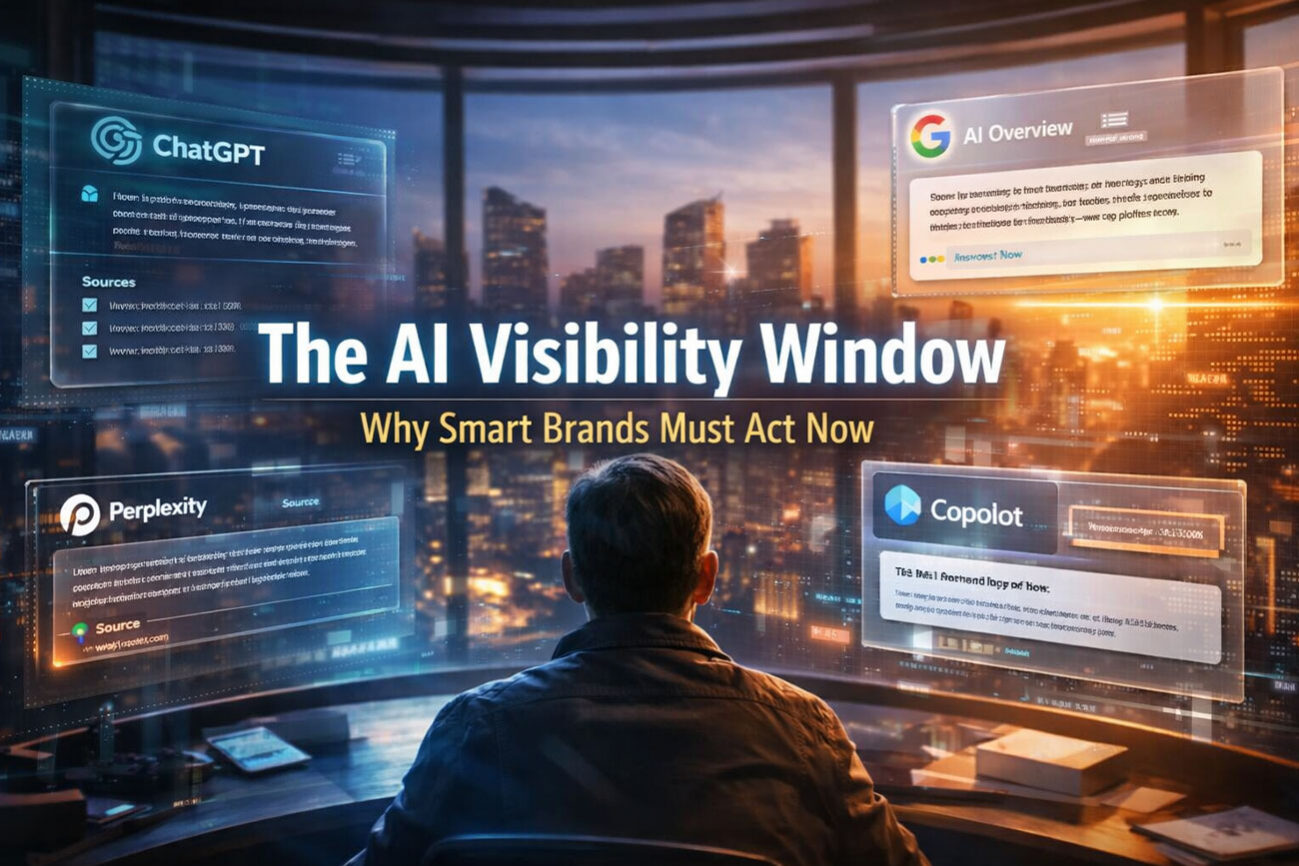
Search behavior has fundamentally changed. Platforms such as ChatGPT, Google AI Overviews, Perplexity, and Microsoft Copilot are no longer presenting simple lists of links. They are generating synthesized answers and citing selected sources within those answers.
Your brand is no longer competing only for ranking. It is competing to be referenced.
Before we go deeper, let me simplify this. You do not need to master AI search mechanics. You need to understand the shift and the opportunity it presents. We handle the architecture and execution. Your role is recognizing the window while it is open.
The Data That Reframes the Opportunity
Recent industry research analyzing AI-assisted search behavior found that visitors arriving through AI-generated pathways convert 4.4 times better than traditional organic visitors.
This matters.
This data reflects a measurable shift in buyer behavior, not a temporary marketing trend.
AI-assisted visitors often arrive with higher intent. They have already engaged with a synthesized explanation and are seeking validation or next steps. When they click, they are typically further along in the decision process.
This reflects a behavioral shift, not a marketing trend.
In my recent article on the Personal Branding Window of Opportunity, I outlined how AI systems are already shaping narratives about individuals. That same shift is now expanding to businesses. The window is not just personal; it is organizational. Brands that act now will define how they are referenced for years to come.
What Is AI Search Optimization?
AI search optimization is the process of structuring and expanding content so that it is referenced by AI systems when generating answers.
Traditional SEO focuses on ranking web pages.
AI search optimization focuses on becoming a trusted source for AI-generated responses.
AI systems prioritize content that:
- Directly answers high-intent questions
- Demonstrates topical authority
- Is clearly structured and extractable
- Shows consistent expertise across related topics
Brands that meet these criteria are more likely to be cited.
Why Being Cited Builds Authority
Authority can now be built before a website visit ever occurs.
When your brand appears as a cited source in an AI-generated answer:
- Trust increases
- Brand recall strengthens
- Authority perception compounds
- Decision confidence improves
Visibility is no longer measured solely by traffic. It is measured by the presence within the answer itself.
Repeated citation compounds authority over time.
What Is Losing Effectiveness
AI systems deprioritize:
- Thin keyword-focused articles
- Repetitive content written only to rank
- Over-optimized pages without substance
Foundational SEO still matters. Technical performance and crawlability remain essential.
What is declining is shallow optimization.
AI systems reward clarity, structure, depth, and recognized expertise.
What Smart Brands Are Doing Now
Forward-thinking organizations are:
- Building content clusters around core expertise
- Publishing educational, question-based content
- Structuring articles clearly for extractability
- Aligning executive thought leadership with company authority
- Expanding authority before competitors do
AI models detect patterns of expertise across interconnected topics. When depth is consistent, citation likelihood increases.
This is how AI visibility compounds.
The Window Is Open
AI-driven search represents an infrastructure shift in how information is discovered and trusted.
The brands that structure authority now will not compete for visibility later; they will define it.
You do not need to navigate this shift alone.
At TruBrand Marketing, we design structured authority systems, expand educational content strategically, and position brands for long-term dominance in AI-driven search environments.
Your role is recognizing the opportunity.
Our role is to ensure you lead within it.
Frequently Asked Questions
AI search optimization, also known as Answer Engine Optimization (AEO), is the process of structuring and expanding website content so it is cited inside AI-generated answers rather than only ranked in traditional search results. Instead of competing just for clicks, brands compete to be referenced within synthesized responses.
Traditional SEO focuses on ranking web pages in search results.
AI search optimization focuses on becoming a trusted source that AI systems reference when generating answers.
SEO aims for position.
AEO aims for citation.
Both are important, but AI-driven search prioritizes authority, clarity, structure, and topical depth over keyword density alone.
Being cited inside AI-generated answers builds authority before a user even visits your website. When your brand appears as a referenced source:
- Trust increases
- Brand recognition strengthens
- Authority perception compounds
- Decision confidence improves
Visibility is no longer measured only by traffic. It is measured by presence within the answer itself.
Yes. Research analyzing AI-assisted search behavior shows that visitors arriving through AI-generated pathways convert at significantly higher rates than traditional organic visitors. These users often arrive with higher intent because they have already engaged with a synthesized explanation and are seeking validation or next steps.
AI systems prioritize content that:
- Directly answers high-intent questions
- Demonstrates consistent topical authority
- Is clearly structured and easy to extract
- Shows recognized expertise across related subjects
Thin, repetitive, or overly optimized keyword content is increasingly deprioritized.
Yes. Technical SEO foundations such as site performance, crawlability, and clear structure remain essential. AI search optimization builds on strong SEO fundamentals. What is declining is shallow optimization without depth, authority, or strategic structure.
Brands increase citation likelihood by:
- Building content clusters around core expertise
- Publishing educational, question-based content
- Structuring content clearly with headings and logical flow
- Demonstrating authority consistently across interconnected topics
- Aligning executive thought leadership with company positioning
AI systems detect patterns of expertise. When depth is consistent, citation probability increases.
No. AI search optimization benefits any brand that relies on authority, trust, and decision influence. In fact, early adoption provides a competitive advantage. Smaller and mid-sized brands that structure authority now can define how they are referenced before larger competitors fully adapt.
Brands that ignore this shift may maintain traditional rankings but lose visibility inside AI-generated answers. Over time, this reduces authority perception, brand recall, and high-intent discovery opportunities. As AI-driven search becomes more dominant, absence from citations can translate into strategic invisibility.
At TruBrand Marketing, we design structured authority systems, expand educational content strategically, and position brands for long-term dominance in AI-driven search environments.
You do not need to master AI mechanics.
Your role is recognizing the opportunity.
Our role is ensuring you lead within it.
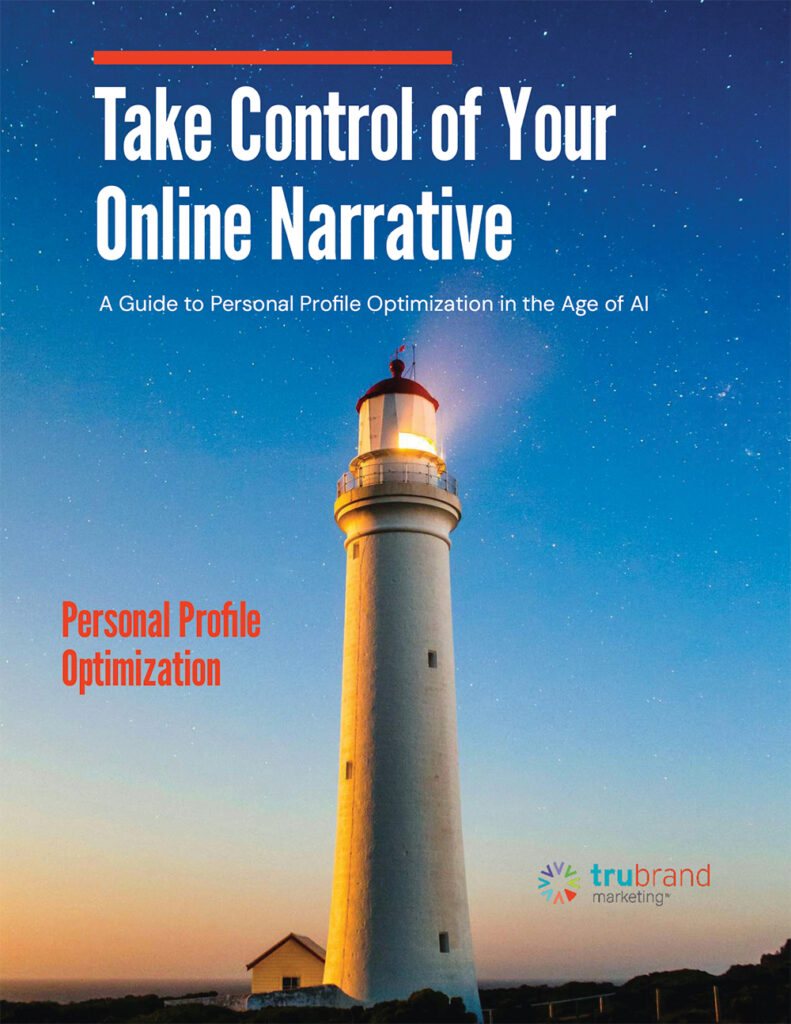
Download the Personal Profile Optimization eBook
Take Control of Your Online Narrative eBook — a practical, insight-packed guide to help you take control of how the world (and AI) sees you online.
Whether you’re an executive, business owner, or professional ready to be seen for who you truly are—this guide is your first step.